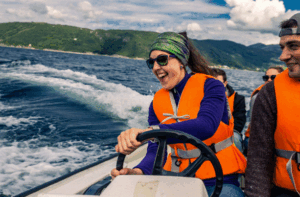
A day out on the water may just be one of life’s pleasures — that is, until a day meant for recreation turns into one of the worst disasters. Boating accidents occur quite often, more than what is normally perceived, and the aftermath can be devastating. Whether under the control of a speedboat, fishing vessel, or jet ski, familiarizing oneself with the common causes of boating accidents and preventive measures is key to ensuring everybody’s safety.
Common Causes of Boating Accidents and Preventive Measures
1. Operator Inattention and Inexperience
As on all other roads, inattention or inexperience may be leading causes of boating accidents. Navigation of the sea is considered to be an art; thus, any wearer of the cap will downplay it. The sorrows can mount from inattentive surroundings to excessive canting or ill-judged watching for other vessels.
Prevention Tip: Always keep a lookout. Be alert, don’t use your phone, and let someone else who is taking charge of the vessel know all the navigation and boating rules.
2. Boating Under the Influence
Drugs and alcohol affect someone’s judgment and coordination and slow their reactions, thus increasing the probability of an accident with that person navigating on autopilot in silent waters.
Prevention Tip: Consider boating as you would driving. A sober operator should always be available, while BUI can attract similar penalties as DUI on land.
3. Excessive Speed and Reckless Operation
A powerful factor putting a lot of boats’ lives at risk in accidents is speed and, ultimately, the boaters’ ability to react to obstacles, waves, and other vessels. Sudden changes of maneuver at high-speed levels can easily rotate out of control, capsize, or throw a passenger overboard.
Preventive Tips: Respect set speed limits and reduce speed in crowded or unfamiliar waters. Always keep a safe distance from other boats, docks, and swimmers.
4. Equipment Failure
Mechanical malfunctioning—be it blocking the engine from energizing, partial choke of the steering, or leaking fuel in a fuel-injected engine—can cause catastrophe, especially when the motion stops in rough waters.
Prevention Tip: Check up on maintenance regularly just prior to going for any trip, and ensure that gear, including life jackets, fire extinguishers, lights, and communication-based equipment, is operational.
5. The Weather and Environmental Conditions
Sudden weather changes, such as storms or fog, can also catch experienced boaters unprepared. Low visibility and wind greatly contribute to accidents with collisions and capsizing.
Prevention Tip: Before you head out, always check the weather. Also, pack emergency supplies like flares and a radio, and if conditions take a turn, head back to shore before that gets complicated.
This article was written by Alla Tenina. Alla is one of the best bankruptcy attorneys in Los Angeles, California, and the founder of Tenina Law. She has experience in bankruptcies, real estate planning, and complex tax matters. The information provided on this website does not, and is not intended to, constitute legal advice; instead, all information, content, and materials available on this site are for general informational purposes only. Information on this website may not constitute the most up-to-date legal or other information. This website contains links to other third-party websites. Such links are only for the convenience of the reader, user or browser; the ABA and its members do not recommend or endorse the contents of the third-party sites.